Houston's humid subtropical climate, mild winter soil temperatures, and recurrent heavy rainfall create ideal reproductive conditions for red imported fire ants. In neighborhoods near dense bayou corridors like…
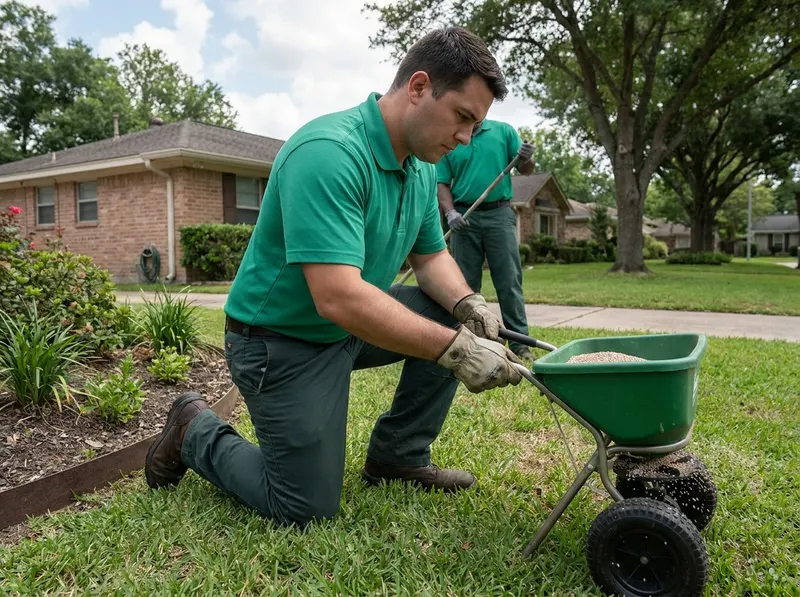
Houston's humid subtropical climate, mild winter soil temperatures, and recurrent heavy rainfall create ideal reproductive conditions for red imported fire ants. In neighborhoods near dense bayou corridors like Memorial, Houston Heights, and Meyerland, seasonal storms saturate the ground and displace subterranean nests, forcing aggressive colonies to throw up visible mounds across open turf within hours. Spot-treating individual mounds with over-the-counter dusting powders only triggers colony budding, prompting reproductive queens to relocate deeper into dense Houston gumbo clay. Whole-yard broadcast management delivers a uniform distribution of granular bait that foraging worker ants transport directly into subterranean brood chambers, neutralizing the queen and dismantling the colony network from within.
Choosing whole-yard broadcast distribution requires two to four weeks for complete biological colony collapse compared to the fleeting knockdown of surface contact sprays, but it provides lasting property-wide exclusion. In expansive residential parcels across Kingwood, Clear Lake, and Oak Forest, untreated turf allows satellite colonies to migrate freely beneath fence lines and expansion joints. Calibrated broadcast applications establish an engineered perimeter defense across the landscape thatch layer, eliminating the aggressive stinging hazards that compromise outdoor spaces for families and pets.
Every job gets a firm, written price after a free on-site visit.
Tell us about your fire ant yard broadcast management job in Houston and we'll send a clear, written quote — usually the same day.
 Selnova Pest Defense Company